This Ain’t Sherlock Holmes: Dashiell Hammett’s Continental Op
Scott Montgomery
“Hammett took murder out of the Venetian vase and dropped it into the alley…. It was a good idea to begin by getting as far as possible from Emily Post’s idea of how a well-bred debutante gnaws a chicken wing. He wrote at first (and almost to the end) for people with a sharp, aggressive attitude to life.” —Raymond Chandler
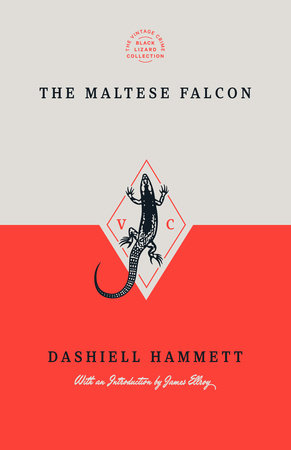
Nobody had as much of an impact on a genre as Dashiell Hammett and his Continental Op. Give some credit to Carroll John Daly, whose first Race Williams story predated Hammett’s by less than a year, but Daly was just delivering the dime-novel, blood-and-thunder yarn with more grit. Hammett brought more to the table. The Op gave us a modern, American detective (no flag waving, it would be contradictory to the subject).
Hammett was part of the Lost Generation, writers and artists affected by the Great War in Europe. If he hadn’t been sidelined in a Tacoma, Virginia, hospital for having contracted TB over there, it wouldn’t be hard to picture him at a Left Bank salon with fellow ambulance driver Ernest Hemingway. As Pulitzer Prize-winning journalist turned crime novelist Ace Atkins, whose Devil’s Garden is based on Hammett’s days in the Pinkerton Detective Agency, says, “He was in a generation of writers who were pushing to do something new.”
His style was to the point, no word wasted, no sentimentality. Hard-boiled. The Op doesn’t have much more than a jaundiced understanding of human nature. Possibly the most emotional he got was stating, “I never shot a woman before. I felt queer about it.”
Wallace Stroby, a great writer of modern hard-boiled crime fiction, like the acclaimed Cold Shot to the Heart, says about the Op, “He has no issues about warning a gangster that he’s about to shoot him in the knees, and then following through on the threat, leaving him crippled, and punctuating the whole encounter with a terse ‘You would have it.’”
“Hammett’s not the romantic Chandler is,” explains Megan Abbott, author of the Edgar Award-winning Queenpin and a noir scholar. “As a result, he had no illusions shattered. He’s less angry and disappointed at the world, less threatened by it than Marlowe. Hammett has more distance from his characters, which allows us a larger picture of the world he paints.”
With Chandler, Marlowe is our last hope; with Hammett, all hope is gone.
What wins out in Hammett’s world is professionalism, sticking to the job and its code. Even the criminals get some respect if they’re true to their partners. Possibly the most the Op ever talks about himself is when he’s offered a large bribe: “In the past eighteen years I’ve been getting my fun out of chasing crooks and tackling puzzles, my satisfaction out of catching crooks and solving riddles. It’s the only kind of sport I know anything about and I can’t imagine more pleasurable future than twenty-some more years of it. I’m not going to blow that up!”
Not only was the detective and his outlook subverted, so were his methods of deduction. In “The Tenth Clew,” he sets up a murder with nine Conan Doyle-style clues, like a bunch of yellow hair, one shoe wrapped in a sheet of five-day-old Philly newspaper with three of the victim’s buttons, and four new buttons; all the things Sherlock Holmes would need to gather everyone in the drawing room and pin it on the butler. It being Hammett’s much grittier world, the Op deduces the tenth one.
“From now on I’m considering all those nine lovely clews as nine bum steers,” realizing they’ve been manufactured for misdirection. As the Op rattles them off to describe whom not to look for, you can feel the contempt in the voice, the Op at the culprit and his creator at mystery writers before him.
Hammett used knowledge gained as a detective: a job based more on tenacity than deduction and knowing the paths of information, which informed his writing and allowed him to introduce many procedural elements to the mystery. “Every page bleeds with his experience as a Pinkerton detective,” Ace Atkins says. “He wrote with authority.”
Like most American heroes, the Op is a working class hero; no middle- or upper-class pursuits like bee keeping or the violin. He doesn’t look at himself being “the better” when dealing with the police. In “Clew,” he introduces us to O’Gar, the cop with whom he works side by side, as “a bullet headed detective sergeant who dresses like a village constable in a movie … but who isn’t to be put out of the reckoning on that account.” To Hammett and the Op, they’re just working stiffs like him.
When asked what he likes most about the Op, Atkins’s answer was, “He is short and fat and tough as hell. He is not a stylized hero. He’s just a tough guy trying to do the right thing in a very f-ed-up world.”
He’s not even his own boss, like later creation Sam Spade and most that followed. He’s just another cog in the machine at the Continental Detective Agency. He doesn’t even have a name.
“It enables us to identify closely with him,” Abbott explains. “Because we are given too few details to distinguish ourselves from him, we feel close to him, and we rely on him to tell us everything, to analyze and interpret the world for us. The big surprise is when he behaves either violently or mysteriously and we are forced to reckon with it. And thus reckon with ourselves.”
Even his enemies are lower class, not masterminds like Moriarity. Hammett saw something much more dangerous than that, another idiot with a gun that adds to the chaos.
“He wrote about real thugs, men and women you’d see in time-faded mug shots of the period,” Atkins says. “They were killers, conmen, two-bit hustlers and jail-wise hucksters who populated America at the time. He wrote about the real deal.”
Wallace Stroby adds, “They’re only a millimeter and a wrong turn away from his heroes.”
And when he nabbed the culprit, what did it matter? He didn’t save the world. Sometimes, he didn’t save the client. There is a feeling that whatever battle the Op had, it was small compared to the grand scheme and larger corruption. Hammett had seen the full-on destruction from a world war and worked for mine owners who wanted to use the Pinkertons as thugs to break up striking miners.
Maybe more than anything that’s what Hammett did for the mystery genre: he fused its style with social commentary. Like Hemingway, what Hammett wrote about was just as important as how he wrote it. Hammett was writing for the people who were like those who populated his fictional world. In doing so, he helped create an art form, like blues and country music, that was for the working class, about them, and from one who understood them.
“As much as his writing can appear simple, his prose carries a multitude of secrets,” Abbott says. “For perhaps the first time, readers of ‘pulp’ felt their concerns, their world, their hardships, their experience of life was worthy of great art.”
“The best crime writers are poets,” Atkins concludes. “That’s a style invented by Hammett and followed by Chandler, Macdonald, and Robert B. Parker. The spare language, the rhythm of the sentences is a gorgeous thing to see on the page.”
And so when the vase that Chandler speaks of got knocked over, it shattered into a million pieces that everybody picked up and ran with.
Click here to read “The Tenth Clew,” one of Dashiell Hammett’s most famous stories featuring the Continental Op.


Ace Atkins has NOT won a Pulitzer; he was just nominated.
Tacoma is in Washington State, not Virginia.